
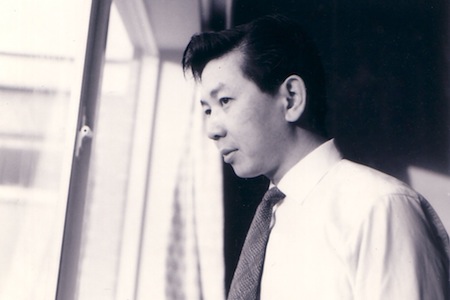
Last month, I became a new father to a beautiful boy. I’ve since thought a lot about my own father, who died 25 years ago and would have loved to see this moment. But a deeper loss than my own struck me the first time my baby boy fell asleep on my chest. All 10 pounds of him curled up, sleeping, snorting, crying, and pooping. It was something my father, and many of his generation, never experienced.
My parents were typical of the early ’60s—he was a doctor, she a nurse. When they had children, she stayed home and raised the four of us. My mother recounts asking him to take care of one of us and he said something like, “I didn’t become a doctor to take care of babies.” He was an obstetrician, no less.
The typical modern feminist critique of that transaction is that our patriarchal world oppresses women. I’d suggest that my father was ultimately the one losing.
He, and many of his generation, were trapped in an emotional imprisonment that robbed them of the pure, unadulterated and selfless joy of taking care of a newborn. It was simply not manly enough. It was perhaps too intimate, especially if you had a son.
But it didn’t end in the ’60s. Twenty years later, my twin sister married an archetypal California hippie who saved dolphins and revered Mother Earth for a living. And yet he too barely changed a single diaper. He’d feel put out if they kept him up at night with crying. He thought his role was to prepare the baby for the “real” world; to make sure the kid wasn’t a wimp. Yes, a toddler needs to have his bubble burst—before he can even speak—and be shown that the world is nasty, brutish, and short.
Most men resist commitment as long as possible and with as many tactics as we can muster. But from the other side of losing that useless battle, I can say it looks a little sad in retrospect. Babies are a great cure for the growing narcissism of a man in his 30s. Usually, we develop multiple solutions to our festering anxieties of self. We work out more, get a hobby, get another hobby, play video games, or go out and drink.
The great thing about a baby is that it’s the ultimate Marxist challenge to one’s self obsession. There are only so many hours in a day to worry about yourself, your career’s progress, and the meaning of your life, when your hands are full of poop—when you’ve had even less sleep than that wicked time when you partied all night. And unlike the many work projects that so easily fill our time, this one feels so important and wonderful, that it makes many of the successes I’ve achieved seem trite in comparison.
If the men of my father’s generation had embraced their babies, I think we’d have fewer rebels without a cause.
The last time I saw my father alive, I was 15 and I was wheeling him around the halls of the hospital as he tried to impart last-minute advice about my girlfriend problems. Then he started crying, saying he was sorry to leave me alone. He felt he was failing in his duties as a father, simply by the act of dying of cancer. The problem isn’t that men of his generation were unable to commit to their children, it’s that they missed some of the best parts.
In an endless search for my father years later, I tried to create a mixtape of songs about fathers and sons. The result wasn’t pretty. It started, predictably, with Harry Chapin’s classic “Cat’s In The Cradle,” a tale of emotional estrangement and the absence of intimacy. It concludes fatalistically “When I hung up the phone it occurred to me, my boy was just like me.” Cat Stevens was next in line with that depressing cry from the son: “How can I try to explain, when I do he turns away again. It’s always been the same, same old story.” The father-son genre only goes south from there.
Many men in my group of friends have estranged relationships with their fathers. They don’t talk to them often, or when they do, it’s painfully aggressive. Deadbeat dads and absentee fathers are commonplace.
I can’t help thinking that every estranged father, when he’s on his deathbed, thinks with deep remorse about the child that he created, which no longer loves him back. That sad cycle started early, and thankfully, I’m learning it can stop with surprising ease, and joy.
Michael Khoo lives in Washington, D.C., with his wife Anastasia and his new son Dax. He is Vice President for Communications at Population Action International and President of SIMPLE: Communications, Strategy & Marketing.
Photo of Dr. Teng Chye Lanny Khoo courtesy of Michael Khoo
Related Links: